What Manga Editors Actually Look For (And How to Check It Before You Submit)
Most manga doesn't fail because of bad art. It fails because the story structure has problems the creator can't see anymore. Here's what professional manga editors actually evaluate, and how to check it yourself before you submit.
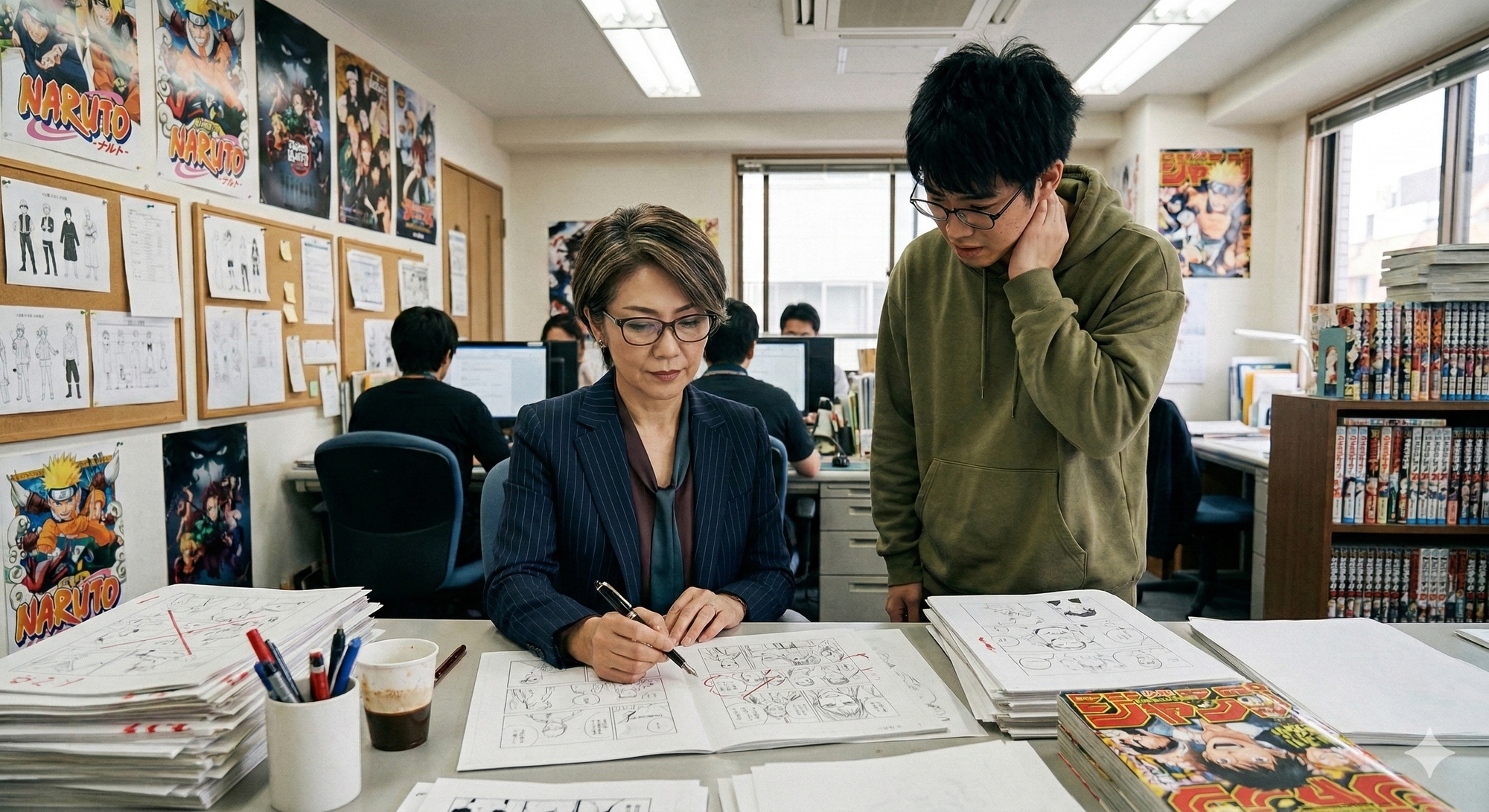
Professional manga editors evaluate five things when they review new work: hook strength, pacing, panel flow, dialogue density, and clarity. Most indie manga creators never get this kind of structured feedback because they don't have an editor. This guide covers each dimension and shows you how to check your own work before submitting it anywhere.
1. The Hook: Does Page 1 Do Its Job?
An editor's first question is always the same: does this make me want to turn the page?
Your first page needs to establish something worth continuing for. That doesn't mean it needs an explosion. It needs an unanswered question, a character in an interesting position, or a visual that earns curiosity.
Weak openers are the most common reason readers stop. If your protagonist is doing something neutral on page 1, you are already at a disadvantage.
How to check it: Read your first page as if you've never seen it before. Is there a genuine reason to keep reading?
2. Pacing: Is the Reader Breathing at the Right Times?
Pacing is the rhythm of your story. Too fast and readers don't have time to feel anything. Too slow and they stop reading.
The most common pacing mistake in manga is not going too slow. It is uneven pacing. Creators will rush through an emotional beat that needed four panels, then spend a full page on a transition that needed one.
Editors look at how long each beat gets relative to its emotional weight. A confession scene should get more space than a character walking to school.
How to check it: Go through your pages and sort each panel as emotional or transitional. Are the emotional moments getting proportionate space?
3. Panel Flow: Can the Reader Navigate Without Effort?
If the reader's eye doesn't know where to go next, they break out of the story.
Poor panel flow is usually invisible to the creator, who already knows the intended reading order. It is immediately obvious to a fresh reader.
Common problems: a speech bubble that reads like it belongs to the next panel, a diagonal layout that confuses reading direction, and size imbalance that draws the eye to a less important panel.
How to check it: Hand your pages to someone with no context and watch their eyes. Where do they hesitate?
4. Dialogue Density: Are Words Working Against the Art?
Manga is not prose. More than 20 to 25 words in a single speech bubble is usually a sign of over-writing.
Editors flag dialogue that competes with the art, characters who say what the visuals already show, and scenes where a monologue does the work that a visual sequence should do.
How to check it: Cover your art and read only the dialogue. Does it carry more information than it should? Could any of it be shown instead of said?
5. Clarity: Does the Reader Know What's Happening?
Clarity is about whether the story events are understandable without rereading.
Editors stop at any panel where they can't immediately answer: where are we, who is doing what, and why does it matter?
How to check it: Ask a test reader to summarize each scene. If their version doesn't match what you intended, the panel is unclear, even if it makes perfect sense to you.
Why You Can't Fully Edit Your Own Work
All five of these are difficult to evaluate on your own work. The more time you've spent on a page, the harder it is to see it fresh.
Professional manga creators have editors for exactly this reason. The editor's job is not to judge whether the manga is good. It is to see it the way a new reader would.
Most indie creators working without a publisher or agent don't have that relationship.
How M2W Fills That Gap
M2W is an AI manga editor. You upload your pages at any stage, from rough storyboard to finished artwork, and it analyzes them across all five dimensions: hook strength, pacing, panel flow, dialogue density, and clarity.
It tells you what is working, what is weak, and what to fix first.
M2W does not generate art. It does not rewrite your story. It gives you the structured editorial feedback that most indie creators never get access to.
Your uploaded work is never used to train AI models. Copyright stays with you. The beta is currently free.
Frequently Asked Questions
What do manga editors look for when reviewing submissions?
Professional manga editors primarily evaluate five things: hook strength (does page 1 pull the reader in), pacing (is the emotional rhythm consistent), panel flow (can the reader navigate without confusion), dialogue density (is there too much text competing with the art), and overall clarity (can the reader follow what is happening without rereading).
How can I get feedback on my manga without a publisher or editor?
Options include sharing work in creator communities on Twitter, Reddit, and Discord, posting on platforms like pixiv or Webtoon and observing where readers stop, asking fellow creators for structured critique, or using a tool like M2W that provides automated editorial feedback across pacing, flow, and story structure.
At what stage should I get feedback on my manga?
As early as possible. Many creators wait until the artwork is finished before seeking feedback, but structural problems like pacing and panel flow are far easier to fix at the storyboard stage. Getting feedback on your rough layout before you commit to finished art saves significant rework time.
What is a manga storyboard called?
In Japanese manga production, the rough storyboard stage is called a name (ネーム). It typically includes rough panel layouts, character positions, and dialogue without finished artwork. Getting editorial feedback at the name stage is standard practice in professional manga production in Japan.
Does M2W work for webtoon format?
Yes. M2W works for both traditional manga format and webtoon vertical scroll format. The pacing and flow feedback adapts to the format of your uploaded pages.
M2W is in open beta. All features are free during the beta period. You will be notified before any paid plans go live.